

A Termite Inspection Looks for What a General Inspection May Not
When insects, wood damage, or another small clue raises a termite question, a focused inspection can clarify whether the concern points to termite activity and what the property needs next.
What prompts an inspection
Suspicious insects
You saw insects but cannot confidently identify what they are.
Unexplained wood damage
A damaged area does not have an obvious explanation.
Evidence near the structure
Something around a crawlspace, foundation, or another part of the property raised concern.
A property transaction
A buyer, seller, inspector, or other property professional raised a termite-specific question.
What JD is trying to determine
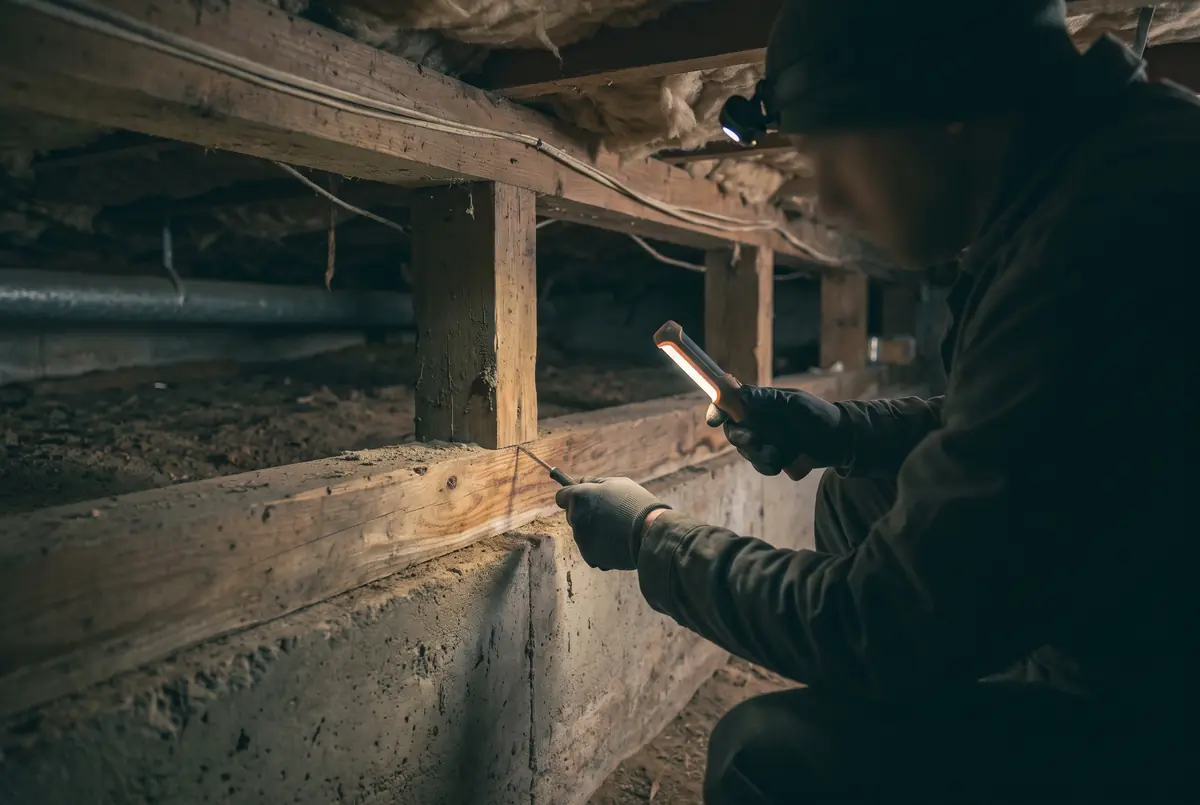
JD looks at whether what was found is consistent with termite activity, where it appears, and whether the property needs any additional termite work.
An inspection is not a commitment to treatment. It is the step that makes a treatment decision informed rather than assumed.
What happens after inspection
No treatment needed: The inspection does not support moving into treatment.
More information needed: JD may need additional context before giving you a clear answer.
Treatment discussion: If the findings support it, JD will explain the situation from there.
What to have ready
Share the city or property location, what was found, where it was found, whether anyone else has looked at it, and photos if you have them. For buyers and sellers, mention the property transaction too.
Termite Inspection Questions
Request a termite-focused inspection
Tell JD where the property is, what raised the concern, and where you found it. He can take it from there.